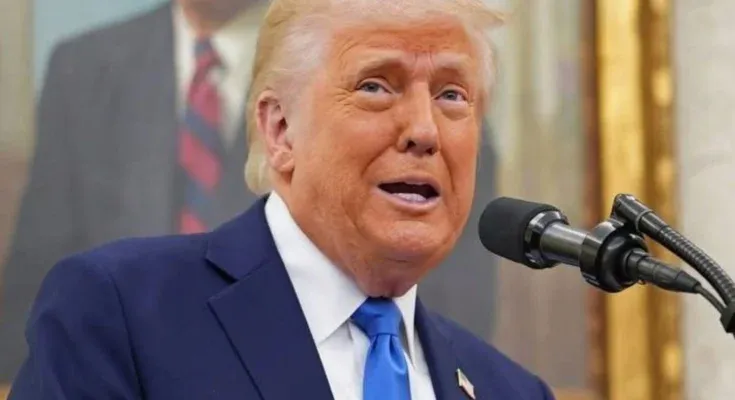
The room went silent when he said it. Reporters stared back, some visibly stunned, while others immediately began typing. President Donald Trump had once again turned his attention to ward the news media, warning that journalists and broadcasters could face consequences over coverage he considered inaccurate or unfair. The issue is bigger than one reporter, one network, or one presidential statement. It goes directly to the long-running constitutional debate over the relationship between political power and an independent press.
In August, Trump said NBC journalist Kristen Welker should be reported to the Federal Communications Commission for what he described as an inaccurate characterization of his record of endorsing political candidates. Trump called for a possible “rebuke or punishment” by the FCC. NBC responded by defending Welker and saying it stood behind her. Reuters reported that the FCC itself has limited authority over broadcast content and generally says it cannot replace a broadcaster’s journalistic judgment with its own because of First Amendment protections.
The controversy has not remained isolated. ABC and Disney have also challenged the FCC in court, arguing that an unusually early review of licenses for eight Disney-owned ABC stations amounts to retaliation connected to the network’s programming and coverage. FCC Chairman Brendan Carr has rejected that characterization, saying the agency’s actions concern broadcasters’ obligations under the public-interest standard. The legal dispute remains ongoing.